What Is a Data Center?
A data center is a physical room and facility that houses IT infrastructure for building, running and delivering your business applications and services. It also stores and manages your business data associated with your applications and services. This is a centralized location where your company’s IT infrastructure is managed by a dedicated server provider.
What Are the Key Functions of a Data Center?
The key functions of a data center are:
Data Storage
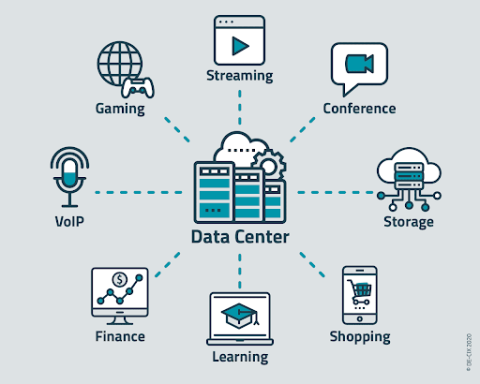
A data center assists in storing a large quantity of business data, including databases, backup, files and other media related to your business. It also uses various storage systems like Storage Area Network, Cloud Storage and Network Attached Storage.
Network Connectivity
A data center helps in connecting the external users and internal systems to various resources using high-speed internet. It also has firewalls, switches, routers and load balancers for ensuring your smooth business data flow and maintaining security.
Data Processing
A data center also assists in handling complicated calculations and ensures smooth data transactions using real-time analytics. This helps in running your business applications smoothly and provides services to your customers faster.
Backup and Disaster Recovery
It also provides backup solutions to protect your data loss. This ensures faster recovery of your system from cyber attacks, power failures and natural disasters.
Security Management
A data center has a firewall that protects your dedicated server from cyber breaches. As a result, your organizational data remains protected. The encryption option enables you to edit your user ID and password whenever required to prevent unauthorized access. It also follows various compliance standards.
Cooling and Environment Control
A data center maintains an optimal temperature to protect your dedicated server hardware. This applies to any location’s dedicated server, including Denver dedicated server. It also uses modern HVAC systems to prevent overheating of your server’s physical hardware to avoid system damage.
Monitoring
A data center examines your system performance, helps your dedicated server maintain 99.99% uptime and handles your website data traffic. It has dashboards to provide real-time alerts in case of server maintenance.
What Are the Four Tiers of a Data Center?
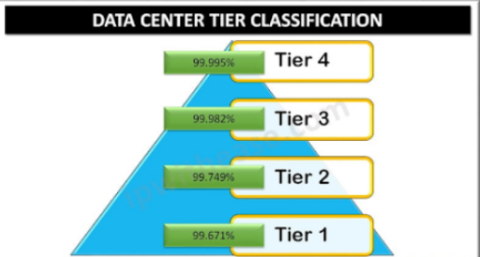
First, Tier 1 data center: Tier 1 data centers are helpful for start-ups and small businesses with limited budgets. They are cost-effective, simple to set up and easy to manage.
Next, Tier 2 data center: This type of data center offers increased reliability and 99.741% uptime for running a business’ operations. It is suitable for small and medium-scale business data protection.
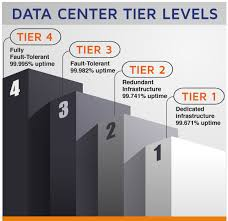
Then, Tier 3 data center: This data center supports your most critical data operations. They provide higher uptime and improved fault tolerance. This data center is suitable for running high-traffic websites like e-commerce and streaming services.
At last, Tier 4 data center: A Tier 4 data center has a maximum uptime of 99.995% and strong fault-tolerant capabilities. They comply with strict regulatory requirements for maintaining critical applications. It is beneficial for large institutions like financial institutions, telecom and energy companies.
What Are the Benefits of a Tier 2 Data Center?
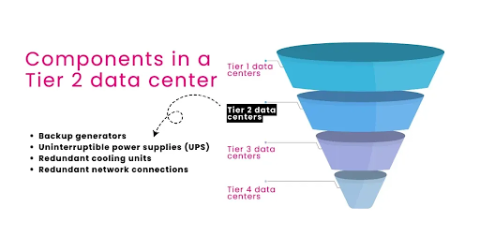
First, Improved Reliability over Tier 1: It has redundant capability components that reduce downtime compared to Tier 1 data centers. For example, UPS systems and additional cooling units.
Next, It is a Cost-effective Solution. It is more affordable than Tier 3 and Tier 4 data centers, thus making it ideal for small and medium-sized businesses.
Also, It Has Redundant Power and Cooling Systems: It reduces downtime risks caused by single points of failure. It ensures partial redundancy in power due to its cooling infrastructure.
Also, It Has Enhanced Security over the Tier 1 Data Center: A Tier 2 data center offers better security measures than a Tier 1 facility. This includes CCTV surveillance, controlled access and fire suppression systems. The feature is available for a New Jersey dedicated server or any business location's dedicated server.
Apart from This, it Provides Scalability for Growing Businesses: It provides flexibility to growing businesses in adjusting their online workload without disrupting their business operations.
At last, it has good disaster recovery options: It provides basic data protection against unexpected power failures for small and medium businesses.
Hence, it can be concluded that a Tier 2 data center is a practical choice for businesses that balance both cost and reliability. If you are a small company planning to grow your business, a Tier 2 data center is best for you.
So, that’s it from me. Hope this has been useful for you in understanding the benefits of a Tier 2 data center for your business.
Final Remarks
A Tier 2 Data Center is beneficial for dedicated server maintenance of small and medium-sized companies.
This provides higher uptime for your company’s dedicated servers compared to Tier 1 data centers.
It gives enhanced security measures to the dedicated servers, including CCTV camera surveillance, authorized system access.
You can service individual components of your dedicated server without any downtime, thus ensuring continuity of business operations.
A Tier 2 data center has backup systems that assist in recovering your data without requiring constant access.
It can be concluded that a Tier 2 data center provides a balance between cost and performance. This is the best choice for businesses that require the best reliability within an optimal budget. Email us at sales@hostingultraso.com to obtain your preferred dedicated server from our Tier II data centers.
Blog Category:
- Abhik's blog
- Log in or register to post comments